Pray Alarm, Calendar & Bible
- 4.7
- Rating
- 5.00M
- Installs
- Free
- Price
 Analysis by App-foxy
I started using Pray Alarm, Calendar & Bible because its central idea is simple but useful: turn prayer into something I remember at the right moment instead of something I keep postponing. Plenty of Bible apps help me read a passage, and ordinary alarm apps can interrupt my day, but this app brings those two habits closer together. That makes it especially interesting for anyone who wants a small spiritual routine rather than another app that expects a long daily session.
In my experience, the strongest part is not the number of tools gathered in one place. It is the way a reminder can give a quiet structure to the day. The app comes from WOOMBIT and sits in the lifestyle category, with a free download and an Everyone age rating. It has reached more than five million installs and holds a 4.7 average from roughly thirty-eight thousand ratings, which suggests that the idea has found a sizeable audience without needing to be complicated.
Why the prayer alarm matters more than another Bible shortcut
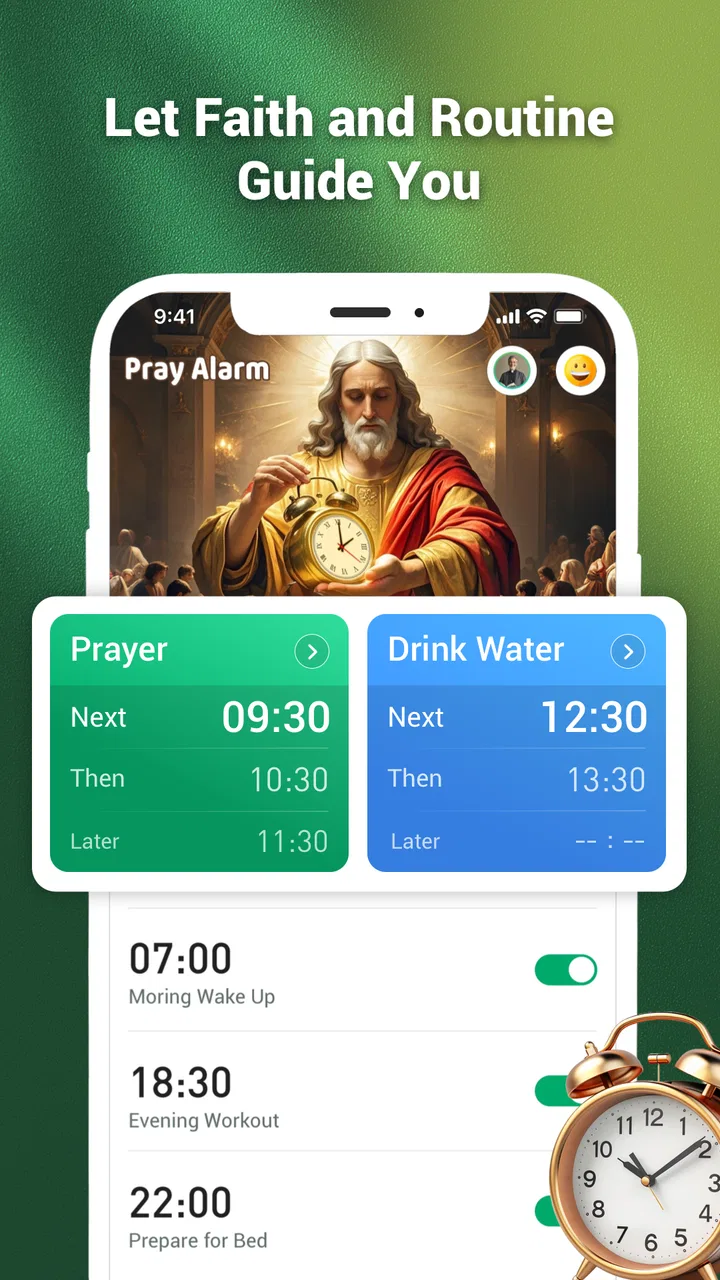
The main capability is the prayer alarm. I see it as a bridge between intention and action. Reading a Bible passage usually depends on me opening the app first, while an alarm reverses that order: it brings the reminder into a part of the day when I might otherwise be busy, distracted, or already moving on to the next task.
You May Also Like

 Blood Strike: 2.5 Anniversary
Blood Strike’s Loadouts Turn Every Drop Into a Tactical Gamble
A close look at Blood Strike’s custom loadouts: how fast access to signature weapons reshapes its battle royale rhythm, rewards preparation, and narrows the gap between fights.

 Pandora - Music & Podcasts
Pandora’s Music Is Easy to Start, but Harder to Recover
Pandora’s strength is its low-effort path from a seed to a station. Its weak spot is how much confidence it asks you to place in connection, setup, and quiet recovery.

 8 Ball Pool
 Is Built on Rivalries, Rematches, and Routine
A close look at the rivalries, rematches, shared routines, and unanswered safety questions that turn a quick pool match into a persistent mobile community.

 Samsung Music
’s Quiet Strength Is Playing What You Already Own
Its reach comes less from spectacle than from dependable access to a personal library. That simplicity is both the app’s strongest retention engine and its ceiling.

 AccuWeather: Weather Radar
AccuWeather Review: A Quick, Clear Forecast for Everyday Decisions
For everyday plans, the best forecast is the one you can understand quickly. AccuWeather makes rain timing, radar, and local conditions easy to act on, with a few trade-offs.

 Hill Climb Racing
Why Hill Climb Racing Still Turns Crashes Into One More Run
A tiny car, a bumpy hill and one more upgrade: Hill Climb Racing keeps resurfacing because its simple chaos makes every near-miss feel personal.
More From Our News Desk



That difference is more important than it sounds. A reading app is excellent when I already have time and motivation. A prayer reminder helps on the days when I have neither. It does not make prayer meaningful automatically, of course, but it can protect a short pause from being swallowed by work, commuting, household chores, or phone notifications.
I would not describe it as a replacement for a church calendar, a study Bible, or personal devotional guidance. Its value is narrower and more practical. It gives a routine a visible place in the day, then keeps Bible and Christian calendar material nearby when I want to continue. The real strength is habit support, not spiritual automation.
The KJV Bible element also gives the reminder a clear reading companion. People who already appreciate the King James Version may enjoy having that translation alongside the prayer-focused workflow. Readers who prefer modern language should think about that before making the app their only Bible. The KJV’s formal wording can be rewarding for familiar readers, but it may feel less immediate to someone encountering biblical text for the first time.
The Christian calendar adds another layer to the experience. Instead of treating prayer as an isolated notification, the app places it in a broader faith-based context. That can help me connect a particular day with reflection, observance, or a theme I might otherwise overlook. It is a modest feature in concept, but it changes the app from a simple alarm into a more focused lifestyle tool.
Setting up a routine without making it feel like homework
My preferred way to use the app is to begin with one dependable prayer moment rather than filling the day with reminders. A single interruption that I can actually honor is more useful than a crowded schedule that I start dismissing. Once the habit feels natural, I can decide whether another reminder would genuinely help.
This is one of the first practical tips I would give a new user: choose a moment that already has a natural pause around it. A morning alarm can work well for someone who begins the day quietly, while a midday reminder may suit a person who has a lunch break. The app becomes less irritating when the alert meets an existing transition instead of fighting against a meeting, school run, or commute.
I also found it helpful to decide what the reminder is supposed to lead to. Sometimes I want a brief prayer, sometimes a Bible reading, and sometimes only a moment of stillness. If I treat every alert as a demand for a long devotional session, I am more likely to ignore it. If I treat it as an invitation to stop and choose what I need, the routine remains realistic.
The Bible quiz and spiritual growth tools make the app more suitable for active engagement than an alarm alone. A quiz can turn spare time into a quick memory exercise, while growth-oriented material can give a user a reason to return after the notification has done its job. I would use these tools selectively rather than trying to complete everything in one sitting. The app works best when the tools support a routine, not when the routine becomes a checklist.
A realistic day with the app
Imagine a weekday in which I leave home early, spend most of the morning handling messages, and only notice at midday that I have not taken a proper pause. A prayer alarm at that transition can be useful because it does not require me to remember the intention on my own. I can silence the alert, take a few minutes with prayer, and open the Bible when I have enough attention for it.
Later, if I have a little spare time while waiting for an appointment, the quiz can offer a different kind of engagement. It is not the same as reflective reading, and I would not confuse the two, but it can reinforce familiarity with Scripture in a lighter format. In the evening, the Christian calendar can help me look back at the day through a faith-centered lens rather than ending the day by scrolling through unrelated content.
That workflow shows the app’s best quality: each part has a different job. The alarm starts the habit, the Bible supports reading, the calendar adds context, and the quiz provides a more active way to revisit knowledge. I would not expect every session to include all of them. The flexibility comes from choosing the piece that matches my energy and available time.
For a family, the Everyone rating makes the app approachable across age groups, although I would still introduce the Bible and quiz elements according to each person’s reading level and interests. For an individual, the same rating means the app is not built around mature entertainment or specialized professional content. It feels designed for ordinary daily use rather than a narrow academic audience.
Where it differs from ordinary alternatives
A standard alarm app can remind me to pray, but it leaves me to find the words, the reading material, and the context elsewhere. That may be perfectly fine for someone who already has a settled prayer practice. The advantage here is convenience: the reminder and the Christian resources live together, so the transition from alert to action has fewer steps.
A dedicated Bible app may offer deeper reading tools, broader translation choices, or stronger study functions. If my priority is comparing passages, researching language, or building a serious study library, I would probably choose that kind of app instead. This one is more compelling when the first problem is remembering to pause, not finding an extensive reference system.
Printed devotionals and church calendars have a different advantage. They can feel calmer and less distracting because they do not place spiritual practice on the same screen as every other phone activity. I would choose print when I want a screen-free routine. I would choose this app when the convenience of having reminders and resources with me is more likely to keep the habit alive.
That comparison also explains why I would not recommend it to everyone. Someone seeking only a digital Bible may find the alarm and lifestyle tools unnecessary. Someone who dislikes phone reminders may feel that the central feature creates more pressure than help. The app is at its best for people who want technology to support consistency, not for people trying to remove technology from prayer.
The small frictions I noticed
The prayer alarm is useful precisely because it interrupts me, and interruption is also its main trade-off. A reminder can arrive at an inconvenient time, especially when my schedule changes. If I repeatedly dismiss it, the feature may become background noise. I would review the routine whenever my work hours, sleep pattern, or family responsibilities change instead of blaming myself for losing motivation.
There is also a difference between opening a spiritual app and being spiritually ready. The app can place a Bible, calendar, quiz, and reminder in front of me, but it cannot decide whether I am attentive or sincere. On a rushed day, I may complete the action mechanically. That is not a flaw unique to this app, but it is worth remembering: a notification can protect time, yet the quality of that time still depends on me.
The KJV focus will be another consideration. For readers who love its rhythm, the translation is part of the appeal. For newcomers, children, or anyone who finds older English difficult, the reading experience may require patience. I would not make this the only Bible resource for a reader who needs contemporary wording or extensive translation comparison.
The collection of features can also create choice fatigue. When I open the app, I may have several possible directions: pray, read, check the calendar, take a quiz, or explore a growth tool. That variety is helpful when I know what I need, but less helpful when I want one very direct function. My solution is to decide in advance what each reminder means, so I do not spend the whole pause navigating.
Because the app is free, it is easy to try without making a financial commitment. That lowers the barrier for someone who is curious, but it also means I would judge it by whether it becomes part of my routine rather than by the first few minutes of setup. A free app can still become clutter if I keep it installed without using it. The practical test is whether the prayer alarm leads me to a real pause often enough to justify its place on the phone.
Who will get the most from it
I think the best match is a Christian who already wants to pray more regularly but struggles with consistency. This person does not necessarily need advanced study tools. They need a gentle external cue and a nearby Bible. The app is also a good fit for someone whose day has predictable transitions and who can protect a short moment when the alarm appears.
It may suit a new believer who wants several ways to explore faith without installing separate apps for every purpose. The quiz can make Scripture feel more interactive, while the calendar provides a sense of rhythm beyond an isolated reading plan. I would still encourage a beginner to start with the Bible and prayer alarm, then add the other tools gradually instead of trying to master the whole collection at once.
It can also work for an experienced reader who wants a reminder layer rather than a replacement for deeper study. I might keep a more specialized Bible resource for research and use this app for the daily cue. That combination makes sense because the two apps solve different problems: one supports understanding, while this one supports remembering to begin.
I would be more cautious about recommending it to someone who wants a completely quiet, paper-based devotional practice, someone who strongly prefers a different Bible translation, or someone who already has a reliable prayer schedule and sees no value in alerts. In those cases, a printed resource, a church-provided calendar, or a dedicated study Bible may be the better choice.
Practical ways to keep the feature useful
My first suggestion is to keep the opening action small. When the alarm appears, begin with a short prayer or a single passage rather than setting an unrealistic standard. Consistency is easier when the app feels like a doorway, not an examination. If I have more time, I can continue with reading, the calendar, or a quiz afterward.
My second suggestion is to match the tool to the moment. Use the Bible when concentration is available, the quiz when attention is shorter, and the calendar when a date or observance gives the day extra meaning. This prevents every feature from competing for the same kind of attention and makes the app feel more purposeful.
My third suggestion is to treat missed reminders as information. If I keep ignoring an alert, the answer may be a poor time rather than a lack of commitment. Moving the routine to a calmer transition can make a noticeable difference. The app is most effective when its timing respects real life instead of pretending every day has the same shape.
WOOMBIT has kept the app focused enough to be approachable, while version 1.9 shows that it is an actively maintained product rather than an abandoned shortcut. It was released on January 23, 2025, and requires Android 8.0 or later, so compatibility should be straightforward for people using a reasonably recent Android device. I would still check the device requirement before installing on an older phone.
My recommendation after using it
After spending time with it, I see Pray Alarm, Calendar & Bible as a habit-building app first and a Bible app second. That is not a criticism; it is the key to understanding it. If I want a reminder that can lead directly into prayer, Scripture, Christian calendar context, and occasional quiz-based review, this is a convenient and focused package.
I would recommend starting with one prayer alarm, keeping the first sessions short, and resisting the urge to treat every tool as mandatory. The app rewards a simple routine more than enthusiastic over-setup. Its limitations are clear: the notification can become noise, the KJV will not suit every reader, and serious Bible study may call for a more specialized alternative.
Still, for someone who regularly says, “I meant to pray today,” this app addresses a very specific and common problem. It does not promise to create faith or discipline on its own. It simply puts a well-timed prompt and relevant resources within reach. If you want technology to help you remember a meaningful pause, rather than replace the pause itself, this is worth trying.
FAQs for Pray Alarm, Calendar & Bible
01What is Pray Alarm, Calendar & Bible, and what can I use it for?
Pray Alarm, Calendar & Bible is a faith-focused mobile app that combines prayer reminders, a religious calendar, and Bible reading tools in one place. It is designed to help users organize daily prayer times, remember important Christian dates, and access Scripture conveniently. The exact features may vary by device and app version, so checking the current store description is recommended before downloading.
02Does Pray Alarm, Calendar & Bible work offline?
Some parts of the app may remain available without an internet connection, such as previously loaded Bible content, saved information, or alarm settings. However, features that depend on updated calendars, online content, synchronization, advertisements, or notifications may require connectivity. If offline Bible access is important to you, verify whether the desired translation and calendar data can be downloaded or used offline on your device.
03Can I customize prayer alarms and notifications?
The app is intended to help users build a consistent prayer routine through reminders and alarms. Depending on the version, you may be able to select notification times, repeat schedules, sounds, or specific prayer events. Android and iOS handle background alarms differently, so battery-saving settings, notification permissions, silent mode, and system restrictions can affect reliability. Allow notifications and review the app’s alarm settings after installation.
04Does the app include the complete Bible and multiple translations?
Pray Alarm, Calendar & Bible may provide access to Bible passages or a Bible-reading section, but the available books, translations, languages, and study features can depend on the app version and licensing arrangements. Some content may require an internet connection or an additional download. Before relying on it for regular study, check the listing or in-app options to confirm that your preferred translation is included.
05Is Pray Alarm, Calendar & Bible free to download, and does it contain ads or purchases?
The app may be available as a free download, but free apps can include advertising, optional purchases, subscriptions, or limitations on certain features. Store pricing and included content can change over time and may differ between Android and iOS. Review the app’s current store page and the purchase screen carefully before confirming any payment, especially if you want an ad-free experience or access to premium Bible and calendar features.
Pros
- Combines prayer alarms
- Bible reading
- and calendar tools in one app.
- Custom reminders can help maintain a consistent daily prayer routine.
- Useful for organizing religious events
- observances
- and personal commitments.
- Bible access makes it convenient to read scripture alongside scheduled prayers.
- Simple faith-focused design may appeal to users seeking fewer distractions.
Cons
- Frequent reminders may feel intrusive if notification settings are not adjusted.
- Some features or content may require an internet connection to work properly.
- Calendar usefulness can vary depending on supported religious traditions and regions.
- Users may encounter ads or locked tools in the free version.
- Customization options may be limited for people with highly specific routines.

Pray Alarm, Calendar & Bible
Gallery